Three games, one box: what Zitro actually shipped to Buenos Aires
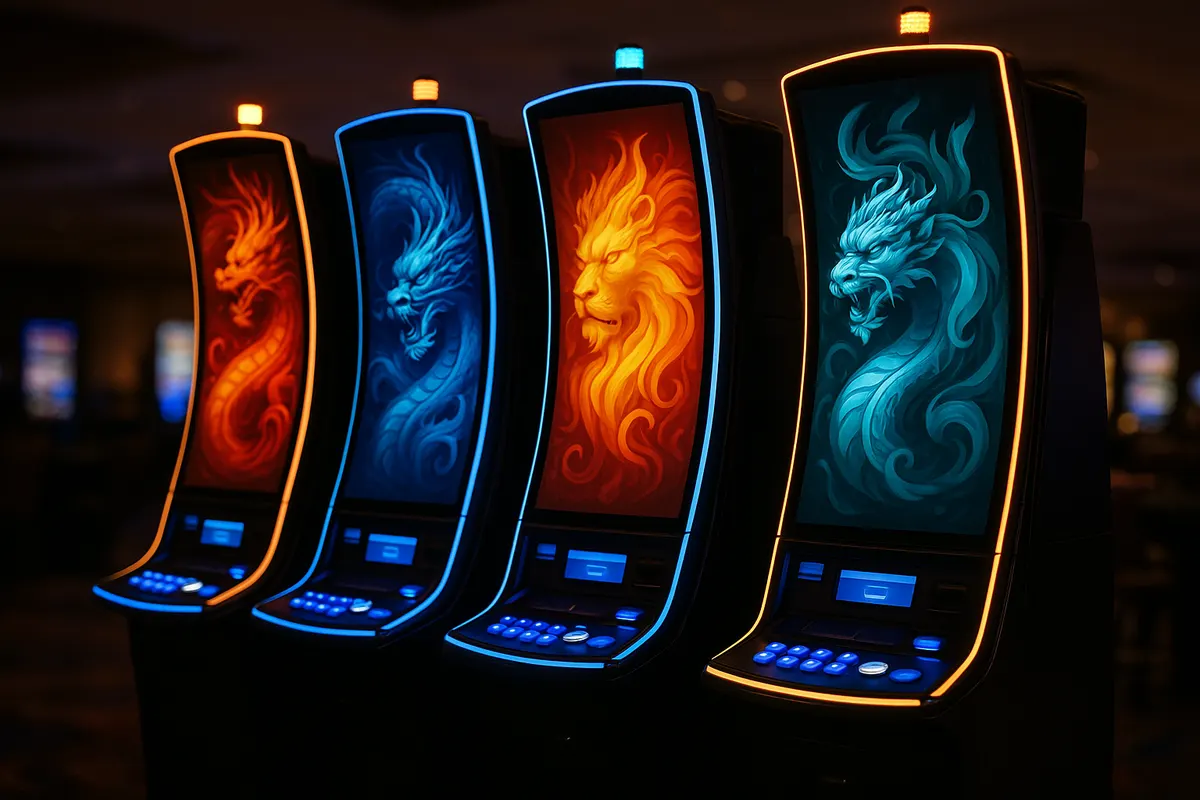
Three titles. One piece of furniture. That is the entire substance of Zitro’s latest Argentine install, and it tells you more about how land-based gambling works than most product launches do. The Zitro Fantasy cabinet has gone live at Casino Buenos Aires carrying the exclusive games Brave Dragon and Lion Falls, plus Legendary Hammer, a title the supplier rolled out across the region more recently.
Here is the thesis, and it runs against how players usually think: on a casino floor, the cabinet is the product. The games are the content it carries. Operators do not buy “Brave Dragon” the way you download a slot app. They buy a machine, with a screen package, a button deck, a note acceptor and a network card, and the games arrive inside it as a curated bundle. Understand that and the Buenos Aires announcement stops being a press release and starts being a lesson in casino floor technology.
Why a cabinet install counts as news at all
Zitro’s own framing is unapologetically about looks. The supplier describes Fantasy as having “a spectacular design and an imposing presence in the hall”, with a distinct visual identity for each title, high quality graphics and differentiated game mechanics. Marketing copy, obviously. But the fluff is pointing at something real: a slot floor is a competition for eye contact. A machine that is taller, brighter and more recognisable from the entrance gets played more, which is why cabinet design budgets exist at all.
The commercial argument Zitro makes is performance history. Brave Dragon, Lion Falls and Legendary Hammer arrive, in the company’s words, backed by proven results in multiple markets, and Fantasy has become one of the stronger sellers in its portfolio since launch, with growing placement among major Latin American operators. That matters because a cabinet without a hit title is an expensive sculpture, and a hit title on a dated cabinet gets ignored.
Casino Buenos Aires general manager Darío Montero put the demand side plainly, saying the venue always looks to add value and fun, that Fantasy has the qualities to do it, and that customers had been asking for the product. Zitro’s regional director for Latin America, Alejandra Burato, represented the supplier side of the deal. Player demand pulling a specific cabinet onto a specific floor is how this industry actually moves inventory.
What a casino gaming cabinet is, part by part
A casino gaming cabinet is the complete physical machine: chassis, displays, controls, payment hardware, a secure game computer and the network link back to the casino’s systems. The game you see on screen is software running inside it. Strip one down and you find the same functional blocks across every major manufacturer.
| Component | What it does | Why it matters on the floor |
|---|---|---|
| Display package | One or more large screens, often portrait-oriented or curved, plus a topper for signage | Decides visibility from across the room and how much space the game art gets |
| Button deck | Physical buttons, a touchscreen panel, or both | Controls bet size, lines and spin; a bad deck kills repeat play |
| Game controller / logic board | Runs the game software and the random number generator | Outcomes are generated here, on approved and signature-verified media |
| Note acceptor and ticket printer | Takes cash, prints and reads TITO vouchers | Ticket-in, ticket-out replaced coin hoppers and cut service calls |
| Network interface | Talks to the casino management system over protocols such as SAS or G2S | Enables metering, accounting, player cards and jackpot links |
| Chassis, lighting, seat position | Structure, ambient LEDs, ergonomics | The “presence” suppliers sell, and the reason tall cabinets command prime aisle spots |
None of this is exotic. It is, more or less, a hardened PC in a locked steel box with a cash handler bolted on and a regulator’s seal over the access panel.
How the game software and the hardware meet
A multi game cabinet ships with a menu. The player sits down, picks from the installed titles, and the cabinet loads that game’s art, sound and maths. Each title has its own paytable and its own mechanics, which is why Zitro stresses that Fantasy’s games have separate visual identities rather than being reskins of one engine.
The part players rarely see is the maths layer. Every land-based title is built around a set of paytable configurations, often called par sheets, and the operator selects one at installation within the limits its regulator allows. Same game, same cabinet, potentially a different configured return in two different jurisdictions. The return to player figure is a long-run average across millions of spins, not a session forecast, and the gap between 100% and that figure is the house edge the venue earns. A 96% configuration means a 4% edge to the house over time. No cabinet changes that arithmetic in the player’s favour.
Outcomes come from a random number generator on the game board, with each spin independent of the last. The cabinet’s screen size, its lighting, how long the reels take to stop, the fanfare on a small win, all of it is presentation. It can make a session feel busier or more dramatic. It cannot make a machine “due”. Independent test labs such as Gaming Laboratories International certify this software before a regulator will approve it for a floor, which is the land-based equivalent of the RNG audits you look for at a licensed online casino.
What the install means in practice
For operators, a premium cabinet is a floor-planning decision with a hard number attached. These machines cost real money per unit, take prime positions, and are judged on win per unit per day against the rest of the bank. Suppliers answer that risk with exclusivity and track record, exactly the pitch Zitro is making here: two titles you cannot get on a rival’s hardware, one freshly launched regional game, and performance data from other markets.
For suppliers, hardware is also a distribution strategy. Place a cabinet and you have placed a channel. Future titles can be dropped onto that installed base without shipping another chassis, which is why winning cabinet slots on big floors matters more to a manufacturer than any single game release.
For the iGaming side, the useful read is how fast the two worlds are converging. The same studios now supply both, land-based titles get ported to online lobbies, and the brands players learn at a cabinet become the ones they search for in an app. Zitro itself sits in both camps as a machine manufacturer and an iGaming content supplier. Casino Buenos Aires and its online arm share a general manager, which is the organisational version of the same point.
How a cabinet differs from the online version of the same game
- The cabinet’s maths is fixed at install by the operator and regulator; an online title usually ships at one certified RTP per operator setup, sometimes selectable by the licensee.
- Cabinets add physical theatre: lighting, seat, haptics, a topper visible across the room. Online games replace that with speed and bet flexibility.
- Land-based play is cash or voucher through a note acceptor; online play runs through wallets, cards and bank rails with KYC on withdrawal.
- Bonuses barely exist on a floor beyond loyalty points and promos; online play is wrapped in deposit bonuses with wagering requirements attached.
The maths underneath, though, is the same shape in both places. The house edge is built in, the RNG has no memory, and the sensible approach is to set a budget and a time limit before you sit down. Treat it as paid entertainment, use deposit or session limits where they are offered, and walk away if it stops being fun.
Quick answers
What is a gaming cabinet?
The complete physical slot machine: chassis, displays, button deck, cash and ticket hardware, the secure game computer running the titles, and the network link to the casino’s accounting and jackpot systems.
Is Zitro’s Fantasy a single game or several?
It is a cabinet that hosts multiple titles. At Casino Buenos Aires it arrived with the exclusives Brave Dragon and Lion Falls alongside Legendary Hammer.
Does the cabinet affect the odds?
No. Odds come from the game software’s approved paytable configuration and its random number generator. Hardware changes how a game looks and feels, not the long-run return.
Why do operators care which cabinet they buy?
Because cabinets compete for attention and floor space, and they are measured on earnings per unit. Exclusive titles and proven results in other markets are what persuade a venue to give one a prime position.